
Formerly MAN Energy Solutions; B&W two-stroke and four-stroke engines, turbochargers, propellers, fuel systems and PrimeServ service.
Everllence Retrofit / Upgrade / Repower Enhanced
Demystifying e-fuels: Explore our alternative fuels glossary
Explore our alternative fuels glossary: carbon-free ✓ carbon-neutral ✓ and low-emission ✓ options explained. Everything you need to know about green power.




Description
The path to decarbonization
Alternative fuels can be grouped into three broad stages, each offering a different level of decarbonization. Starting with transitional fossil alternatives, then carbon-neutral options, and ultimately progressing to carbon-free e-fuels, these categories help clarify your options and support informed decisions in sectors that are hard to electrify, such as shipping.
Carbon-free fuelsCarbon-free fuels do not emit carbon dioxide (CO2) when they burn or when they are produced. They are based on green hydrogen, which is made using renewable energy and water.
Carbon-neutral fuelsCarbon-neutral fuels do not increase CO2 in the atmosphere when they are burnt because they are based on CO2 taken from the atmosphere as a feedstock. For example, biofuel is made from plants that take CO2 from the air by photosynthesis.
Alternative fossil fuelsThese fuels emit CO2 in their production and consumption, but a lower rates than conventional liquid fossil fuels. They can lower CO2 emissions and sometimes reduce other pollutants such a sulphur and nitrogen oxides (SOX / NOX).
Paving the way to net zero
Carbon-free fuels
Also known as green fuels, e-fuels are liquid or gaseous fuels such as green hydrogen, green methanol, and ammonia that are produced with electricity from renewables. In sectors where direct electrification is not feasible, e-fuels allow a smooth transition from fossil to sustainable energy sources. Many e-fuels can be blended with conventional fuels and used interchangeably. Methanol, for example, can be used in existing storage systems and engines, making the transition easier and faster.
Ammonia (NH₃) is a colorless, pungent gas which becomes a liquid under pressure. When generated by renewable sources, ammonia has virtually no carbon footprint and emits no CO2, SOX, particulate matter or unburned hydrocarbons when combusted. Already widely used in industrial processes as an agricultural fertilizer, ammonia is playing an increasingly crucial role in the maritime energy transition thanks to its low production costs.
Read more about ammonia’s contribution to shipping
Find out about Everllence’s advanced two-stroke, dual-fuel ammonia engine
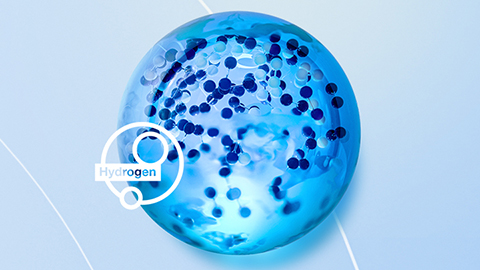
Green hydrogen is the simplest, most basic e-fuel. It is created by splitting water (H2O) into oxygen (O) and hydrogen (H2) using electrolysis powered by renewable energy. This hydrogen can then be used either directly as fuel for engines or as core component for the synthesis of other green fuels such as ammonia (with nitrogen), methanol, or SNG (with carbon, captured from the air, biomass or industrial plants' exhaust gases).
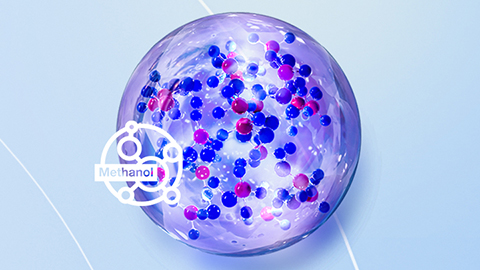
Methanol (CH3OH or MeOH) is a colorless, water-soluble liquid with a mild alcoholic odor. It boasts the highest hydrogen-to-carbon ratio of any liquid fuel at regular ambient conditions. As a result, it can act as a key energy carrier. Methanol is a clean-burning, cost-effective fuel, since it can be used with existing infrastructure. And when produced from biomass or synthesized from renewable energy such as solar or wind, green methanol can reduce carbon emissions by up to 95%.
Bridging the gap
Carbon-neutral fuels
Sometimes referred to as GTL diesel or FTD (Fischer–Tropsch diesel), synthetic diesel is a clean-burning liquid fuel produced by chemically transforming another hydrocarbon fuel, usually natural gas. This transformation is achieved through Gas-to-Liquid (GTL) technology which reconfigures the molecular structure of gaseous hydrocarbons into longer-chain liquid hydrocarbons suitable for diesel engines. At the heart of GTL production is the Fischer–Tropsch synthesis, a chemical process that converts syngas, a mixture of hydrogen and carbon monoxide, into synthetic diesel.
Biofuel is a diverse group made from predominantly plant-based energy sources. They should not be confused with biomass, which refers specifically to solid fuels like wood and peat or the source material (or feedstock) that biofuels are made from (such as agricultural crops and residues, animal and human waste, and food and organic refuse).
Liquid biofuels such as biodiesel, bioethanol, and hydrotreated vegetable oil (HVO), are usually made from biomass sources. For power generation applications, they can either be blended with liquid fossil fuels or can be used as a direct replacement. While liquid biofuels can be classified as renewable, they do not all have the same carbon footprint as fuels made from food crops are less sustainable than those made from organic waste.
Synthetic natural gas (SNG) encompasses various alternatives to conventional natural gas that closely mirror its composition and properties. In addition to coal, SNG can be produced from waste biomass or generated through the use of renewable energy. These production methods result in bio-SNG/biogas and e-gas/syngas, respectively. Depending on the feedstock, SNG serves as a low-carbon or potentially carbon-neutral replacement for fossil fuels. Due to its comparable composition, SNG can be blended with LNG or natural gas and utilized interchangeably across all applications. Additionally, liquefied or compressed SNG is suitable for transport and storage within the existing gas infrastructure.
The first steps towards clean power
Alternative fossil fuels
VLSFO contains less than 0.5% sulfur by weight compared to up to 3.5% found in traditional high-sulfur fuel oil. This complies with the maximum sulfur content permitted in marine fuels as laid out in the International Convention for the Prevention of Pollution from Ships (MARPOL).
LNG is natural gas that has been converted to a liquid form through a cooling process, resulting in a substantially reduced volume for export, transportation, and storage. LNG is widely recognized as an effective transitional fuel for marine propulsion and power generation applications. Its use leads to lower emissions of SOX, CO2, NOX, and particulate matter when compared to traditional fuel oils.
LPG is extracted from natural gas by absorption. It is commonly used in domestic situations (cooking and heating) as well as many industrial applications. It has a high energy density and is easier to store than LNG or heavy fuel oil (HFO). LPG can contain close to zero sulfur and meets the requirements for Sulphur Emission Control Areas as well as lowering CO2 emissions.
Ethane (C2H6) is a colorless, odorless gaseous alkaline extracted from natural gas and used as fuel. When cryogenically cooled to -88.3 °C, ethane condenses to become a liquid, reducing its volume for transport and storage.
Talk to the experts at Everllence
Evaluating your alternative fuel options
Changing to a more sustainable fuel is not always a simple decision. Everllence PrimeServ (former MAN Prime Serv) experts know the intricacies of the engines and equipment at the core of your operations and can leverage useful cross-industry experience. Together, let’s evaluate your options!
Power-to-X
The Power-to-X process converts renewable electricity into storable fuels. Everllence’s transformational technology converts electricity into carbon-neutral synthetic fuels, which can then be used in other sectors or be stored until needed.
Engines running on future fuels
Everllence is developing pioneering technologies like dual-fuel engines and propulsion systems that have a potential to contribute to a carbon-neutral future. Learn more about our focus on different kinds of future fuels, the engines operating on these fuels and the technology behind them.
More from Everllence
Equipment
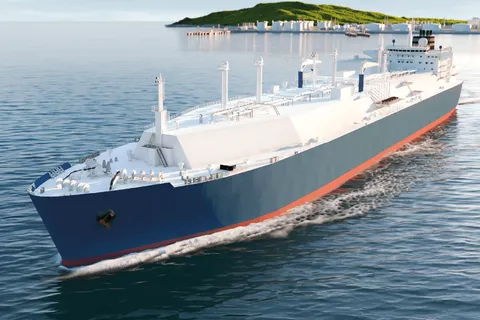
35/44DF CD: The full spectrum of power
Discover the 35/44DF CD (former MAN 35/44DF CD) engine for your ships: Powerful ✓ Fuel efficiency ✓ Low methane slip ✓ Find out what Everllence offers you!
Equipment
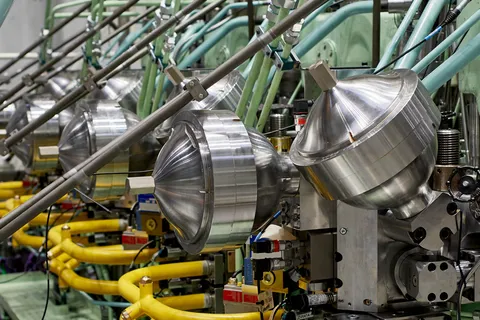
A new chapter – ammonia two-stroke engines
Join the maritime energy transition with Everllence’s two stroke ammonia powered engines – flexible, efficient, and ready for sustainable global shipping.
System / Package
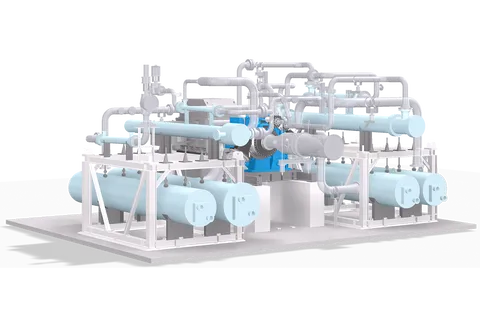
Carbon Capture, Utilization, and Storage
CCUS Carbon Capture solutions to decarbonize your business carbon capture, storage & utilisation CO2 compression talk to our experts!
Equipment
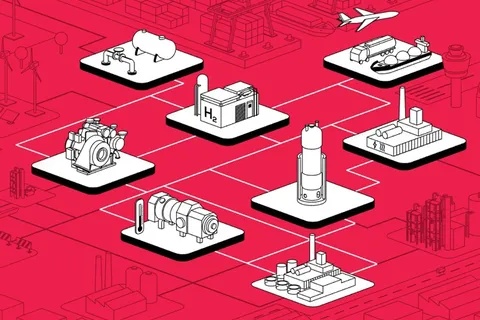
Compressors for hydrogen applications
The latest compressor systems for efficient hydrogen compression. Green hydrogen ✓ Pipeline technology ✓ Learn more about our tailored solutions.
Equipment
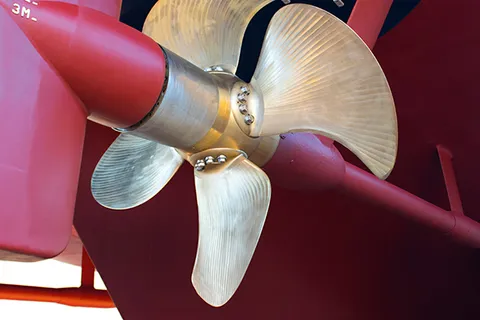
Controllable pitch propellers for varying propulsion demands
Benefit from our versatile and high-efficiency propeller range. Everllence’s (former MAN Energy Solutions) Alpha CPPs are versatile propulsors that meet
Equipment
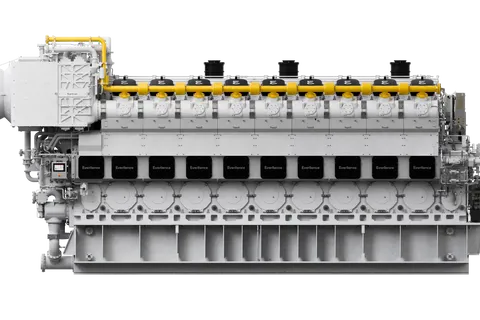
Dual fuel engines: built for flexibility
Our dual fuel engines offer full fuel flexibility. P Performance P Efficiency P Reliability. Discover more about the Everllence range here!
Equipment
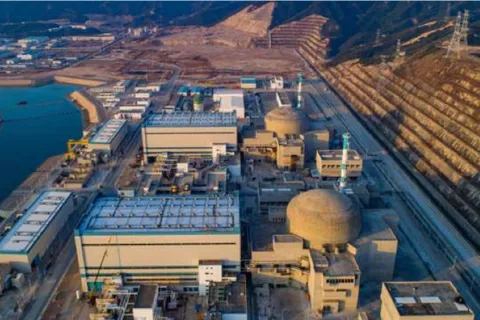
Emergency diesel generators - engineered for safety
We provide reliable emergency diesel generators to add safety to nuclear power plants.
Equipment
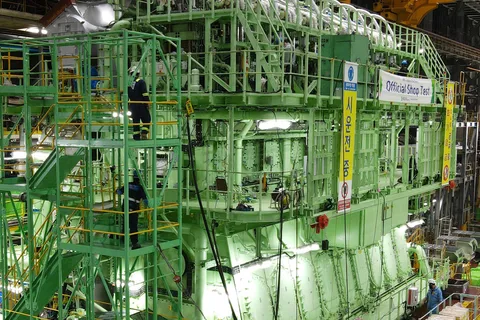
Everllence B&W ME-LGIM – the world’s first two-stroke methanol engine
The Everllence B&W ME-LGIM (former MAN B&W ME-LGIM) engine is the first ever two-stroke dual-fuel engine capable of running on both methanol and
Equipment
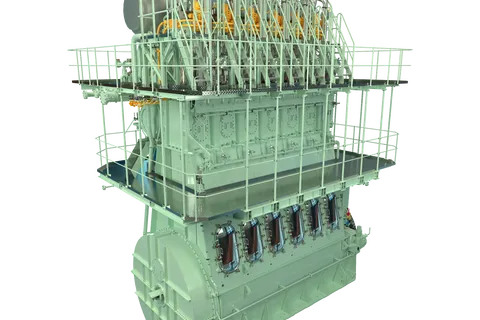
Everllence B&W ME-LGIP – The optimal choice for LPG carriers
Discover the Everllence B&W ME-LGIP (former MAN B&W ME-LGIP) engine: two-stroke ✓ lpg-fuelled ✓ fuel flexibility ✓ full retrofit potential ✓
Equipment
Evolving excellence with the latest 32/44CR marine engine
The Everllence 32/44CR is a proven medium‑speed platform, now updated to meet today’s efficiency, emission, and fuel‑flexibility requirements.

System / Package
Find the right engine for electric propulsion
Powerful diesel-electric engines offering future-ready propulsion solutions. ✓ Optimize fuel efficiency ✓ Ensure reliability. Learn more today!
Equipment
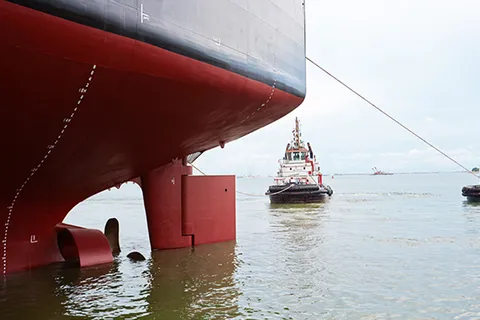
Fixed pitch propellers for long-haul propulsion
Discover our fixed pitch propeller range for your ships: Powerful ✓ Fuel efficiency ✓ Low TCO ✓ Learn about Everllence’s flexible Alpha propeller solution!