
Formerly MAN Energy Solutions; B&W two-stroke and four-stroke engines, turbochargers, propellers, fuel systems and PrimeServ service.
Everllence Retrofit / Upgrade / Repower Enhanced
Navigate decarbonization regulations for in-service fleets
Navigate your existing fleet's emissions and compliance with Everllence PrimeServ. Explore how our leading solutions can steer your in-service vessels




Description
What is the CII regulation?
The Carbon Intensity Indicator (CII) by the International Maritime Organization (IMO) measures ships’ carbon efficiency, calculating CO2 emissions per tonne-mile of cargo. Ships are rated from A (most efficient) to E (least efficient), encouraging greener practices.
How can ships improve their energy efficiency?
Ships can improve their CII rating by optimizing speed, using sustainable fuels, and installing energy-saving technologies. Performance is recorded in the Ship Energy Efficiency Management Plan (SEEMP), with annual reviews to ensure continuous improvement.
What does CII mean for compliance?
CII measures a ship’s CO₂ emissions per cargo capacity and nautical mile, with stricter thresholds over time. Ships rated D for three years or E for one year must submit a corrective plan to achieve a C rating or better. This applies to ships over 5,000 GT
What is the EU ETS (EU Emission Trading System) regulation?
The EU Emission Trading System (EU ETS) requires shipping companies to report CO2 emissions and hold emission allowances. Ships are rated from A to E based on their Carbon Intensity Indicator (CII), with performance recorded in the Ship Energy Efficiency Management Plan (SEEMP).
What is the impact on your business?
Customers will pay for their emissions, with costs rising from 90 Euros per ton of CO2 now to about 280 Euros by 2026. As emission quotas decrease, the Carbon Price will increase.
What does EU ETS mean for compliance?
Shipping companies must report CO2 emissions and hold enough allowances to cover them. Non-compliance can result in fines and operational restrictions, making it essential to adapt to these regulations.
What is the FuelEU maritime initiative?
The EU Fuel regulation, part of the FuelEU Maritime initiative, aims to reduce the carbon intensity of maritime fuels. It sets targets for greenhouse gas emission reductions, promotes renewable and low-carbon fuels, mandates on-shore power supply for ships in major EU ports, and includes penalties and incentives for compliance. This aligns with the EU’s Fit for 55 package and European Climate Law.
The regulation requires businesses to adopt renewable and low-carbon fuels, potentially necessitating investments in new fuel technologies and infrastructure, especially for on-shore power supply at major EU ports.
What does FuelEU mean for compliance?
Shipping companies must meet stringent standards to reduce carbon intensity, using low-carbon and renewable fuels by set deadlines. Non-compliance can result in fines and operational restrictions. Maritime operators need to upgrade fuel systems and adopt compliant fuels to align with EU regulations for a sustainable maritime sector.
Pioneering compliance in sustainable maritime operations
Everllence equips maritime operators with advanced technologies and services designed to meet the demands of new decarbonization regulations, including CII, EU ETS, and FuelEU Maritime. Our solutions, ranging from fuel-efficient retrofits to cutting-edge digital monitoring systems, ensure that your fleet complies with regulations like EU ETS and FuelEU and advances toward greater sustainability and operational excellence. We offer tailored assessments and implementations, supported by a global service network, to help you optimize performance and compliance seamlessly.
Your path to compliance
You’re only a few steps away
- Your situation now
- Analysis by the OEM designer experts
- Solutions mix (digital, retrofit, spare parts)
- Achieve compliance with regulations
Contact our experts
Two-Stroke solutions
EcoCam
The EcoCam is a low-cost, simple fuel-saving product. This low-load optimized virtual cam gives you lower emissions and instant fuel savings between 10% and 60% load. Supporting compliance with decarbonization regulations and improving CII performance, it enables efficient slow steaming with operational flexibility for mechanical engines and is available for engines with a wide exhaust camshaft.
Learn More
EcoNozzle
Fuel savings with the EcoNozzle, the latest addition to the Eco family, are designed to reduce emissions across the full load range. With this new concept fitted, your engine will support CII rating improvement while delivering state-of-the-art combustion control.
PMI VIT
PMI VIT system is used for mechanically controlled Everllence B&W two-stroke engines and ensures the optimal cylinder pressure by controlling fuel-injection timing via an electronic actuator on the VIT (variable injection timing) rack.
Flexible Turbocharger Cut-Out
The Flexible Turbocharger Cut-Out (TCCO) gives operators the option to disable one of the turbochargers for slow steaming operation. This improves the performance of the remaining turbochargers, thus reducing SFOC.
EcoTuning
EcoTuning is a tailor-engineered part-load tuning solution that significantly reduces fuel consumption, supporting fleet decarbonization and compliance with EU decarbonization regulations such as the Carbon Intensity Indicator and the EU Emissions Trading System. This retrofit tuning is specifically designed for Everllence B&W two-stroke ME and ME-C engines, optimizing engine performance through software-based fine-tuning of the maximum combustion pressure.
EcoTorque
Governor control to improve cylinder liner condition and lower fuel consumption. EcoTorque improves the cylinder liner condition and fuel consumption by stabilizing the fuel index. This means that short-term external influences will not put excess strain on the engine, and the fuel index will remain steady.
PMI Adaptive Cylinder Control
With PMI Adaptive Cylinder Control, Everllence is taking engine tuning to the next level. Using a new, patented algorithm, closed-loop control ensures that each individual cylinder always operates at its optimal cylinder pressure. This delivers the best engine performance and the lowest possible fuel consumption at all times – with fuel savings of approximately 1.5 g/kWh.
Flexible Turbocharger Cut Out
PMI auto-tuning
PMI auto-tuning is used for electronically controlled Everllence B&W two-stroke engines. This PMI system configuration ensures the optimal cylinder pressure by adjusting the fuel-injection timing and the opening of the exhaust valve.
Dual fuel conversion
A dual-fuel conversion is one of the most effective ways to drive greater efficiency, profitability, and especially CII compliance. Reliability, emission reduction, and alignment with EU maritime regulations are just some of the benefits our advanced retrofit solutions provide.
Maintenance kits
Correct use of Maintenance Kits assists in reducing fuel and lube oil consumption and ensures optimal energy utilization for propulsion or power generation. Continuous and preventive maintenance of engine components is key to maintaining an optimal CII rating and supporting EU decarbonization regulation compliance.
Cermet-coated piston ring
OEM piston rings are a critical part of your engine and play an important role in maintaining the performance of surrounding components, including emissions, fuel oil consumption and impacting your CII rating.
MXPSS
By using the Docking Package Service Solution, you will always get the latest design, most optimized spare parts and thus optimal engine operation, cost savings and emission optimization. This supports compliance with carbon intensity regulations and helps maintain a strong CII rating.
Four-Stroke solutions
AdaptiVIT
The AdaptiVIT system uses combustion parameters to determine the injection timing. This guarantees the most efficient combustion process fully complying with the specified emission regulations. Permanent cylinder pressure measurement is the basic parameter of the AdaptiVIT system. Injection timing is permanently closed-loop controlled by the stand-alone system AdaptiVIT.
Learn more
Engine Part Load Optimization (EPLO)
This retrofit aims to improve the efficiency between 50% and 65% maximum continuous rating (MCR) with a modification of t
Documents
More from Everllence
Equipment
35/44DF CD: The full spectrum of power
Discover the 35/44DF CD (former MAN 35/44DF CD) engine for your ships: Powerful ✓ Fuel efficiency ✓ Low methane slip ✓ Find out what Everllence offers you!
Equipment
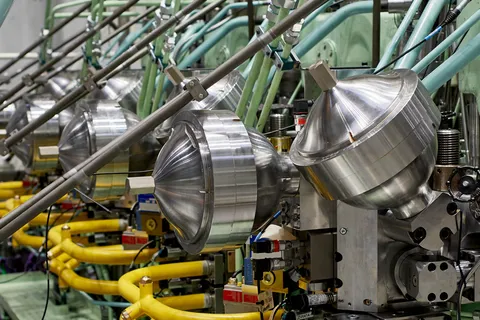
A new chapter – ammonia two-stroke engines
Join the maritime energy transition with Everllence’s two stroke ammonia powered engines – flexible, efficient, and ready for sustainable global shipping.
System / Package
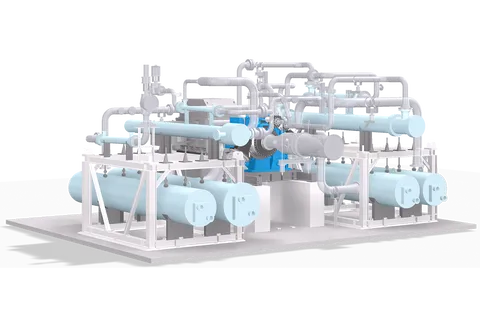
Carbon Capture, Utilization, and Storage
CCUS Carbon Capture solutions to decarbonize your business carbon capture, storage & utilisation CO2 compression talk to our experts!
Equipment
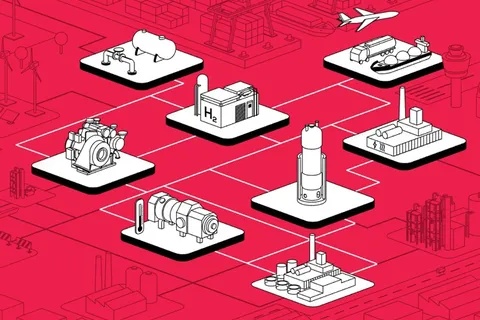
Compressors for hydrogen applications
The latest compressor systems for efficient hydrogen compression. Green hydrogen ✓ Pipeline technology ✓ Learn more about our tailored solutions.
Equipment
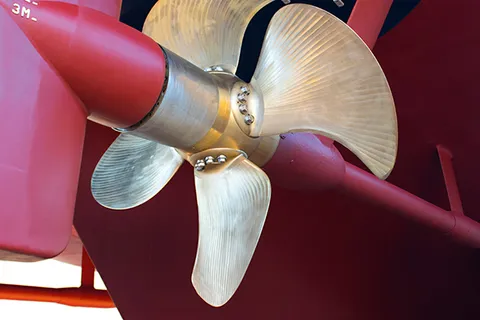
Controllable pitch propellers for varying propulsion demands
Benefit from our versatile and high-efficiency propeller range. Everllence’s (former MAN Energy Solutions) Alpha CPPs are versatile propulsors that meet
Equipment
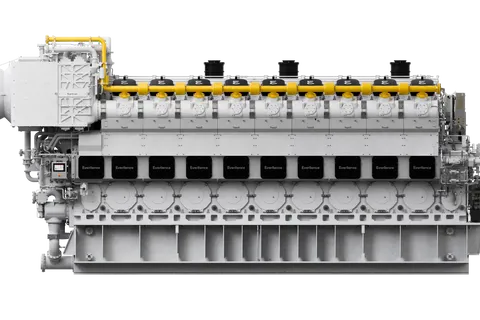
Dual fuel engines: built for flexibility
Our dual fuel engines offer full fuel flexibility. P Performance P Efficiency P Reliability. Discover more about the Everllence range here!
Equipment
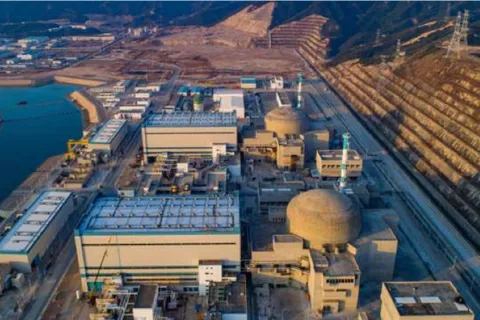
Emergency diesel generators - engineered for safety
We provide reliable emergency diesel generators to add safety to nuclear power plants.
Equipment
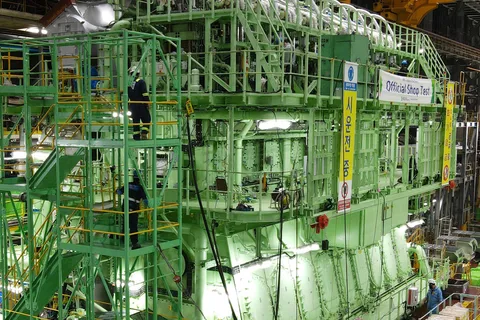
Everllence B&W ME-LGIM – the world’s first two-stroke methanol engine
The Everllence B&W ME-LGIM (former MAN B&W ME-LGIM) engine is the first ever two-stroke dual-fuel engine capable of running on both methanol and
Equipment
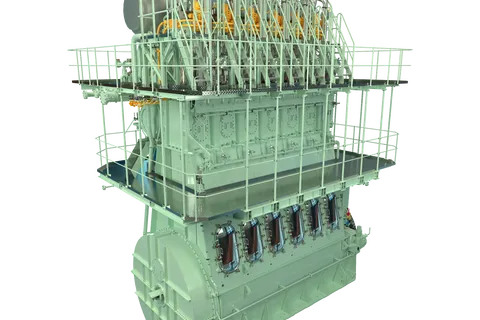
Everllence B&W ME-LGIP – The optimal choice for LPG carriers
Discover the Everllence B&W ME-LGIP (former MAN B&W ME-LGIP) engine: two-stroke ✓ lpg-fuelled ✓ fuel flexibility ✓ full retrofit potential ✓
Equipment
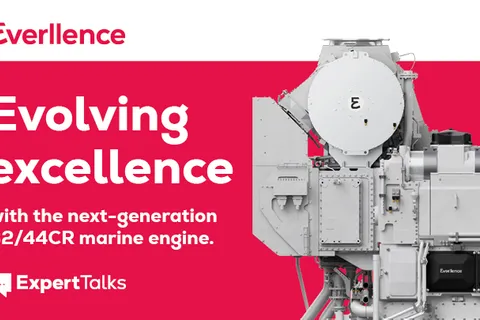
Evolving excellence with the latest 32/44CR marine engine
The Everllence 32/44CR is a proven medium‑speed platform, now updated to meet today’s efficiency, emission, and fuel‑flexibility requirements.

System / Package
Find the right engine for electric propulsion
Powerful diesel-electric engines offering future-ready propulsion solutions. ✓ Optimize fuel efficiency ✓ Ensure reliability. Learn more today!
Equipment
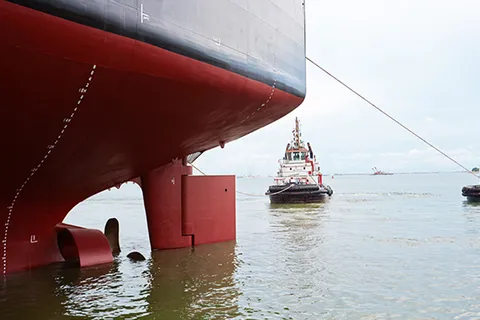
Fixed pitch propellers for long-haul propulsion
Discover our fixed pitch propeller range for your ships: Powerful ✓ Fuel efficiency ✓ Low TCO ✓ Learn about Everllence’s flexible Alpha propeller solution!